

Temporomandibular joint. That’s your jaw joint, but its acronym, TMJ, has become the short-hand term for problems associated with it. Clinically, it’s called TMJ Syndrome or Disorder, and often presents itself as a popping sound and sensation near the jaw joint.
TMJ Disorder symptoms take many forms, such as headaches, earaches, stuffiness, ringing in the ears, dizziness, numbness in fingers and arms, limited movement or locking of the jaw, and pain of many types (behind the eyes, in the face, back, neck or shoulders). In many cases, worn or cracked teeth are the only signs and pain does not occur until the disorder has advanced.
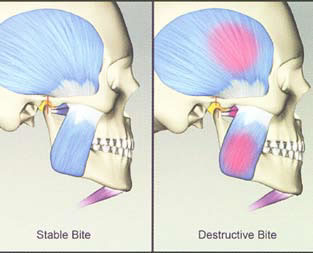
In order to determine the best course of TMD treatment, an accurate diagnosis is imperative. A consultation with Dr. Toomey will help to determine if you are suffering from TMD (temporo-mandibular-disease) and if so, what can be done to help you. There are simple solutions to resolve pain for you, while saving your joint cartilage and bone (which you need).

Dr. Toomey has developed a cutting-edge technique for TMJ treatment that he has now taught other TMJ Doctors from around the US. He is also working to publish a paper with the amazing results. His patients are seeing immediate results and movement of their mislocated joint to a better position, which allows symptoms to improve and often, disappear. TMJ treatment in Baltimore doesn’t have to be overwhelming, and we can help you get back to a life without pain.
THE TOOMEY TECHNIQUE
It is estimated that up to 87% of people have an unbalanced bite, leading to a wide range of painful and often damaging effects. An expert in disorders of the temporomandibular joint (TMJ), Dr. Toomey has revolutionized an exciting new treatment that re-centers and stabilizes the position of the jaw.
-
- allows your own body to realign your jaw joint
- is non-invasive & non-surgical
- requires no mouthguard or orthotics
- maximizes your insurance benefit
- reduces needs for future dentistry due to fractured or broken teeth
- has achieved remarkable results in patients from 12 to 87, almost all of whom experienced immediate relief!
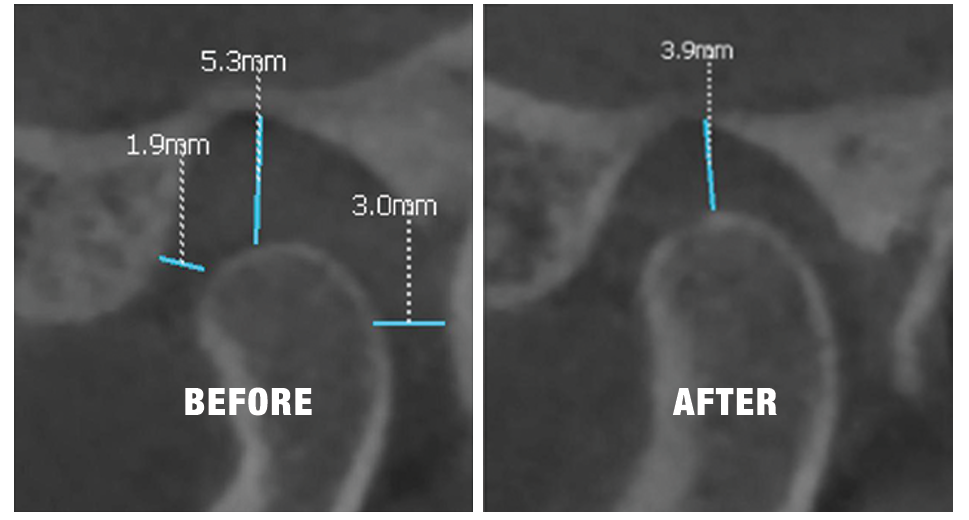
Advanced diagnostics reveal jaw alignment before and after the Toomey Technique was applied.
This patient experienced complete relief from daily headaches and jaw pain as well as better, more restful sleep — all within 24 hours.
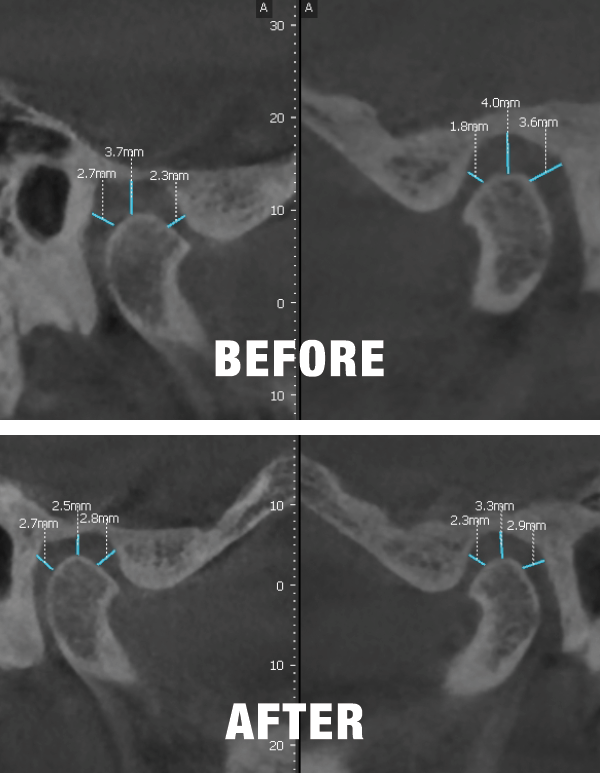
“TMJs show radiographic signs of mild degenerative joint disease. The condyles were positioned slightly inferiorly and anteriorly on 3/6/2023 and centrally on 8/9/2023, within their respective fossa.” -UMD – Oral & Maxillofacial Radiology
“I was headache free, which is crazy, considering I had headaches every day.”
– Moustafa, age 31
“I went to all the doctors and took all the medicine they threw at me, and then I saw this online. By the third day, I had huge relief.”
– Derek, age 27
“My headaches went away instantly, and I didn’t have any facial pain like I had been having.”
– Amy, age 37
“Within 36 hours, I was pain free and had much better range of motion in my neck.
I felt aligned. And I’m sleeping so much better, so life is better.”
– Tim, age 71
“I think you’re a miracle man!”
– Carol, age 84
Jaw, neck or facial pain? Headaches? Teeth grinding or fractures? Ringing in the ear or hearing issues?
Numbness or stiffness in the neck, shoulder or arm? Dizziness? Balance issues?
All of these symptoms and more can be traced to the jaw joint, and relief could be a phone call away.
CALL TOOMEY DENTISTRY TODAY!
410.823.6000
Patient Reviews
“For the first time, I have complete trust.”
“I had headaches, jaw and ear pain. After two appointments, I could feel immediate relief and change in my jaw muscles. I have tried everything else and this was like a miracle.”
“The minute we walked in the door, we knew we were in the right place.”
“My massage therapist noticed a big difference in my facial, head and neck muscles!”
“It feels good going to the dentist, which is not something normal!”